


Overview
I’ll be honest — I’ve wasted money on portable coolers before. Ones that barely moved the temperature needle, sounded like a hairdryer on full blast, and collected dust by August. So when I came across EpiCooler, my first reaction was skepticism, not excitement.
But my situation was getting genuinely uncomfortable. My apartment runs hot in summer and freezing in winter, I rent so wall-mounted AC is off the table, and running the building’s central heating for one room felt wasteful and expensive. I needed something that actually worked — not another gadget that looked good in photos.
After using EpiCooler through a full summer and into winter, here’s everything I found out.
What Is EpiCooler?
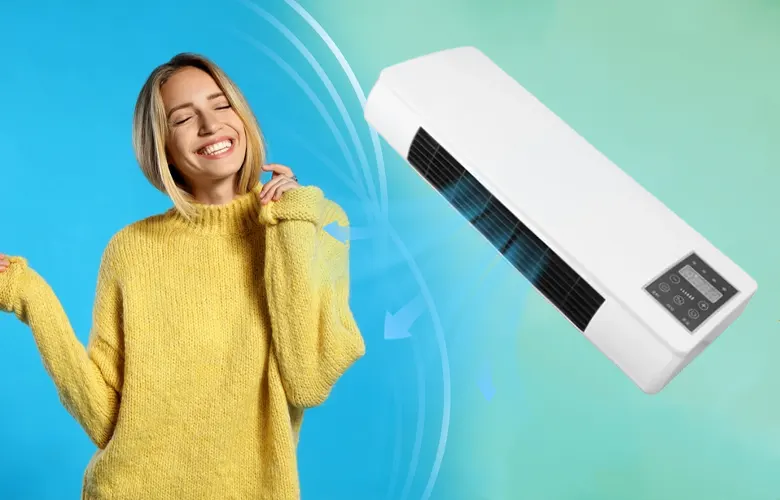
EpiCooler is a portable climate unit that handles both cooling and heating from one compact device. It plugs into a standard wall socket — no installation, no drilling, no tools — and lets you control temperature through a touchscreen panel or the included remote.
What caught my attention was that it doesn’t use the cheap evaporative method most budget coolers rely on. Instead, it runs a coil-based cooling system and a PTC ceramic heater — technologies you’d normally find in proper standalone appliances. That difference matters, especially if you’ve been burned by underpowered portable units before.
It covers rooms up to 51 m² (around 550 sq ft), cools down to 16°C, heats up to 45°C, and runs on six modes including energy-save. For a single bedroom or home office, that range is more than enough.
Key Features of EpiCooler
- Dual function: Cools in summer, heats in winter — one device for both seasons.
- Zero installation: Plug into any standard socket and it’s ready. No brackets, no modifications, no permission needed from a landlord.
- Six operating modes: Cooling, heating, fan-only, energy-save, and combination settings give you real flexibility rather than just an on/off switch.
- Whisper-quiet operation: I ran it through three consecutive nights before I stopped consciously noticing it. That’s the benchmark I use for “actually quiet.”
- Remote + touchscreen control: Adjusting settings from bed without getting up is a small thing that makes a genuine difference in daily use.
- Layered safety system: Overheat protection, overcurrent circuit, real-time temperature sensor, and auto-shutoff — more safety redundancy than most space heaters I’ve owned.
- Portable design: Light enough to carry between rooms. I move mine from my office desk to my bedroom most evenings.
Technology Inside EpiCooler
Coil-Based Cooling System
This is what separates EpiCooler from evaporative coolers that struggle in humid weather. Warm air passes over internal cooling coils, sheds its heat into the coil surface, and comes back out cooler.
PTC Ceramic Heating Element
PTC stands for Positive Temperature Coefficient. What that means practically: the ceramic element physically cannot overheat, because its electrical resistance increases as temperature rises, self-limiting the heat output. A study in Basel found PTC systems maintain stable temperatures more safely than conventional heating coils, without needing an external thermostat to do it.
Internal Fan
The fan is what turns localized temperature change into actual room comfort. Without active circulation, cooled or heated air just sits near the unit. Fan-driven airflow distributes conditioned air significantly more evenly across a room — which is exactly what I noticed in practice.
Live Temperature Sensor + Auto-Cutoff
EpiCooler monitors its own internal heat in real time. If conditions push past safe limits, it reduces output or shuts down automatically. This kind of feedback loop is among the most effective protections against thermal events in consumer electronics.
Overcurrent Protection
A dedicated circuit shields the unit from voltage spikes. Polymers journal research confirmed overcurrent protection substantially reduces damage risk during abnormal power conditions — useful to know if your building’s wiring isn’t perfectly stable.
How Does EpiCooler Work?
The concept is straightforward once you understand the two separate systems running inside it.
For cooling, EpiCooler draws warm room air across its internal coils. The air gives up its heat to the coil surface and gets pushed back into the room noticeably cooler. Unlike evaporative cooling, this process doesn’t depend on humidity levels — it works the same whether it’s a dry summer or a muggy one.
For heating, the PTC ceramic element takes over. It warms up quickly and steadies itself at a consistent temperature without the dangerous heat spikes older metal-coil heaters produce. The element can’t physically exceed its safe range, which is why the exterior stays cool to the touch even during extended heating sessions.
In both modes, the fan actively circulates the conditioned air rather than letting it pool near the unit. The temperature sensor watches internal conditions the entire time, ready to trigger a cutoff if anything drifts out of safe parameters.
My Personal Experience With EpiCooler
Week 1
Setup took about three minutes — unbox, plug in, select a mode. My immediate impression was how quiet it ran. I set it to cooling in my bedroom and left it on overnight. By morning the room was noticeably cooler than previous nights, and I’d slept through without once being woken by noise. I did notice it works better with the door closed — open rooms take longer to respond.
Month 1
I moved it between my bedroom and home office daily. The portability is genuinely practical, not just a spec-sheet feature. The remote meant I could adjust temperature from my desk without interrupting work. My electricity bill for that month came in lower than the previous summer month — I’d stopped using the building’s central system entirely for my unit.
Into Winter
Switching to heating mode was as simple as changing the setting on the remote. The room reached a comfortable temperature within about 10 minutes. The exterior stayed cool throughout — something I specifically tested given my previous experience with space heaters that become burn hazards after 20 minutes. I ran it overnight twice with no issues.
Overall
I’ve used it through a full summer and half a winter at this point. It hasn’t underperformed once in a way that made me question the purchase. The quiet operation, the portability, and the genuine temperature change are all exactly what the product claims.
Before and After Using EpiCooler
Before
My bedroom hit uncomfortable temperatures by late afternoon in summer and stayed warm well past midnight. In winter, my home office was cold enough that I’d work in a jacket. I owned a small desk fan and a basic space heater — two separate devices with two separate storage problems, and neither one fully solved the issue.
After
Summer nights became genuinely comfortable. I stopped waking up hot. My office is now usable in winter without wearing extra layers. One device handles both seasons, I freed up storage space, and my energy bills dropped because I’m not running the building’s system to condition one room.
Side Effects
EpiCooler is safe and well-tolerated for regular use, but a few things are worth knowing upfront.
It’s not a whole-home solution. In larger or open-plan spaces beyond 550 sq ft, you’ll feel the effect near the unit but may not reach the far end of the room effectively. Closed, reasonably sized rooms get the full benefit.
The vents need occasional cleaning. Dust buildup on the intake grilles reduces airflow over time. A quick wipe every few weeks keeps performance consistent — it’s a minor maintenance step but worth knowing about.
At higher fan speeds, there’s a soft operational hum. It’s not disruptive, but it’s not completely silent either. At lower speeds, I genuinely stopped noticing it.
Pros and Cons
Pros
- Handles both cooling and heating — eliminates the need for two seasonal devices
- Works straight out of the box, no setup required
- Exterior stays cool to the touch even during heating mode
- Quiet enough for uninterrupted sleep and work
- Portable enough to move between rooms daily
- Energy-efficient for single-room use compared to central HVAC
- 30-day money-back guarantee removes the purchase risk
- Suitable for renters — no property modification needed
Cons
- Only available through the official website
- Vents need occasional cleaning for consistent airflow
How to Use EpiCooler
- Step 1: Placement
Set EpiCooler on any flat, stable surface — a desk, floor, bedside table. Position it where airflow can circulate freely into the room rather than directly against a wall. For faster results, keep the door closed. - Step 2: Select Your Mode
Use the touchscreen or remote to choose cooling, heating, fan-only, or energy-save. Set your preferred temperature. The unit responds within a few minutes. - Step 3: Let It Run
No rinsing, no refilling, no maintenance schedule beyond occasional vent cleaning. I typically set mine about 20 minutes before I want the room at temperature — by the time I’m ready to sleep or start working, it’s already there. - Step 4: Move It As Needed
EpiCooler is light enough to carry between rooms without effort. I bring mine from my desk to my bedroom most evenings. There’s no reconfiguration needed — plug in wherever you move it and it’s running again in seconds
Is EpiCooler Worth It?
For my situation — renting, needing one room comfortable in both seasons, wanting something quiet enough for overnight use — yes, genuinely worth it.
The 30-day money-back guarantee is the practical safety net here. If EpiCooler doesn’t perform in your space, you’re not locked in. But based on my experience through summer and into winter, the performance held up to what the product claims across both seasons.
It won’t fix a large open-plan space or replace a whole-home HVAC system. But for a single room, it’s a well-built, low-maintenance, genuinely portable solution.
Prices & Discounts
EpiCooler is currently available at a promotional discount through the official website:
- 1 Unit- $137.99
- 2 Units- $110.99
Free shipping is included on select bundles. Every order comes with a 1-year warranty and a 30-day money-back guarantee. Pricing may vary based on active promotions on the official site.
If you need two rooms covered — or want one for home and one for an office — the two-unit bundle brings the per-unit cost down meaningfully.

Conclusion
EpiCooler delivers on the core promise: one device that handles real temperature change in a single room, quietly, without any installation, across both seasons. The technology inside it — coil-based cooling, PTC ceramic heating, live temperature monitoring — is grounded in published research rather than marketing language. The safety features work as described. The noise level is genuinely low.
It’s not trying to replace central HVAC, and it doesn’t need to. For renters, remote workers, light sleepers, and anyone tired of juggling seasonal appliances, EpiCooler is a practical, well-engineered answer to a problem most people just put up with.
The 30-day money-back guarantee means the only real cost of trying it is the time it takes to find out whether it works for your space. Based on my experience, I’d take that bet.
Frequently Asked Questions
Q. How long before I actually feel a temperature difference?
Q. Can I use it in a room with no air conditioning at all?
Q. Does the heating mode feel like a real heater or just warm air?
Q. Will it work if I leave a window slightly open?
Q. Is the remote easy to use in the dark?
Q. Can I run it all night without worrying?
Where to Buy?
For more details, please click here
References
Glozine avoids using tertiary references. We have strict sourcing guidelines and rely on peer-reviewed studies, academic researches from medical associations and institutions. To ensure the accuracy of articles in Glozine, you can read more about the editorial process here.
- A New Thermal Controlling Material with Positive Temperature Coefficient for Body Warming: Preparation and Characterization - PMC https://pmc.ncbi.nlm.nih.gov/articles/PMC6600788/
- Effects of Overload Current on the Ignition and Burning Hazards of Polyethylene-Insulated Wires - PMC6600788 https://pmc.ncbi.nlm.nih.gov/articles/PMC12986589/

Glozine is a platform where we review and recommend products related to health, technology and more. When it comes to purchasing decisions, our journalists combine independent research with extensive testing to save your time and money. We’ll help you get it right, whether it’s finding an amazing product or getting useful advice.


Rating Snapshot:
Review this product & share your experiences with other customers. Don't see your question? Ask away!
Add a YouTube video